
- Beauty injections19
- Beauty injections
- Aesthetic medicine consultation
- Biomodelling Profhilo
- Biomodelling Profhilo Structura
- Biorevitalisation
- Biostimulation Radiesse
- Biostimulation Sculptra
- Biostimulation Sunekos Body
- Botulinum injections
- Cellulite treatment Sunekos Cell 15
- Dissolving injectable fillers
- Injectable fillers
- Injections for excessive sweating
- Mesobotox
- Mesotherapy
- Plasma therapy
- Plasma therapy for hair
- Polynucleotide biostimulation
- Radiesse hybrid biostimulation
- Redermalisation
- Body treatments10
- Body treatments
- Biostimulation Sunekos Body
- Cellulite treatment Sunekos Cell 15
- Chemical peeling of the back
- Cryolipolysis fat cell freezing
- Cryolipolysis for the chin
- Depigmentation treatment of the intimate area
- Electromagnetic muscle stimulation EMLS
- Injections for excessive sweating
- RF lifting
- Shockwave therapy
- Facial treatments21
- Aesthetics and laser treatment
- Acne and problem skin6
- Dry, sensitive and red skin9
- Dry, sensitive and red skin
- BioRePeel needle-free biorevitalisation
- Biorevitalisation
- Brightening light acid peel
- Chemical peeling
- Express brightening treatment
- Light therapy with chemical peeling
- Men’s skincare
- Mesoestetic Age Element rejuvenating facial treatment with massage
- Physiodermie facial treatment with massage
- For ageing skin11
- For ageing skin
- BioRePeel needle-free biorevitalisation
- Chemical peeling
- Express brightening treatment
- Face and decollete massage
- Men’s skincare
- Mesoestetic Age Element rejuvenating facial treatment with massage
- Microneedling collagen therapy with chemical peeling
- OxyGeneo injection-free rejuvenation
- Physiodermie anti-ageing facial treatment
- RF lifting
- Skinretin Xpert retinoid treatment with exosomes
- Pigmentation spots and uneven skin tone5
- Relaxing6
- Hair treatments2
- Intimate area procedures3
- IPL and laser procedures14
- IPL and laser procedures
- Birthmark and other skin lesions removal with a laser
- Carbon peeling with laser
- CO₂ laser rejuvenation
- Fractional laser resurfacing
- IPL acne treatment
- IPL photorejuvenation
- Laser removal of warts and corns
- Laser tattoo and permanent makeup removal
- Photo-fractional laser rejuvenation
- Photopeel
- Pigment spot removal
- Removal of capillaries and redness
- Scar removal with laser
- Vaginal laser therapy
- Laser epilation4
- Microneedling3
- Plastic surgery20
- Aesthetics and laser treatment
- Appointments4
- Operations and procedures16
- Operations and procedures
- Abdominoplasty
- Benign breast tumor removal
- Breast asymmetry correction surgery
- Breast augmentation
- Breast implant removal
- Breast lift
- Breast nipple correction
- Breast reduction
- Eyelid plastic surgery or blepharoplasty
- Gastric Bypass Surgery
- Gastric sleeve operation or sleeve gastrectomy
- Gynecomastia - Breast reduction for men
- Lip plastic surgery
- Mini bypass surgery
- Minor eye area surgery
- Removal of supernumerary breast tissue
Removal of capillaries and redness
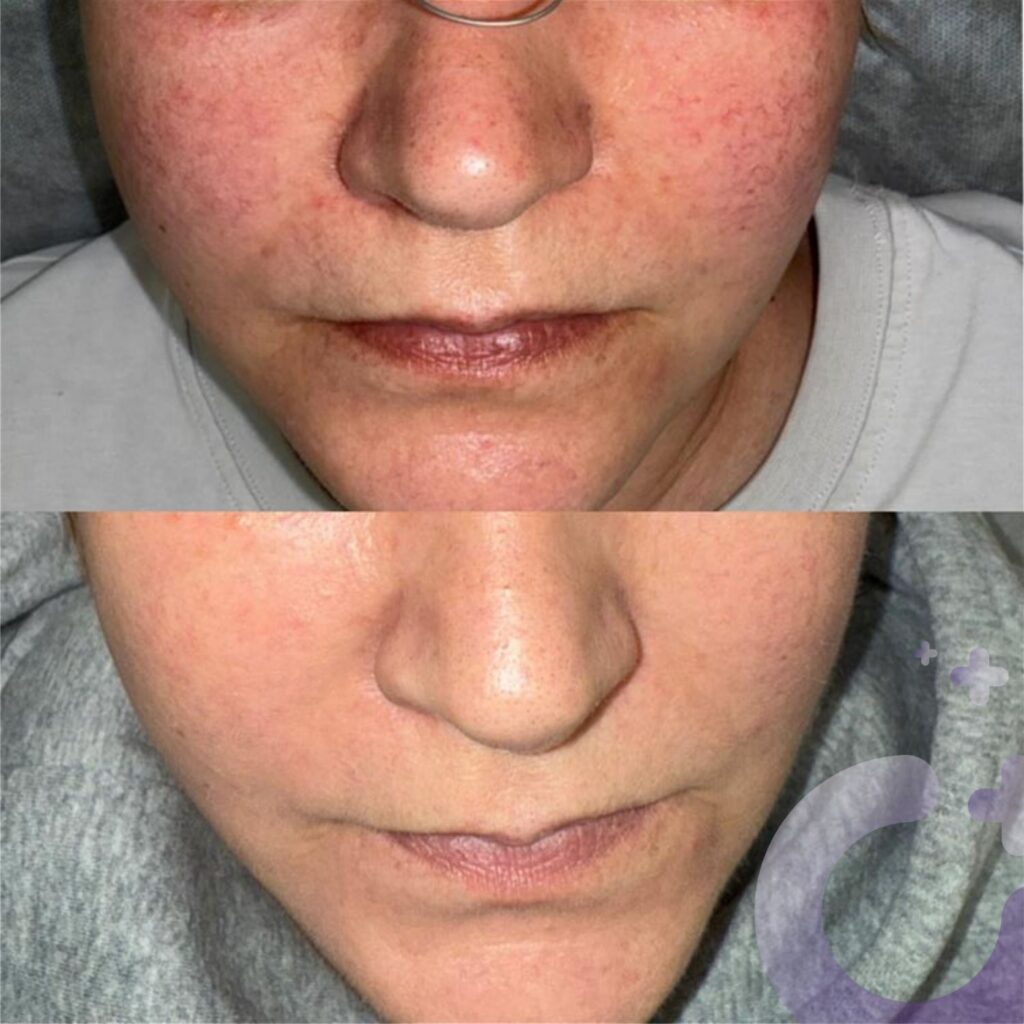
Look for appointment timesCapillaries are small blood vessels in the superficial layers of the skin that, due to various factors, may lose their elasticity and dilate. Dilated blood vessels may become visible on the skin as individual red or bluish vessels or vascular networks – so-called “spider veins” for example on the nose, cheeks, chin, or as diffuse redness across the entire face, as well as on the neck, décolleté, and in fact almost anywhere on the body. Vascular lesions, such as angiomas and haemangiomas, may appear as reddish or purple spots, papules, nodules, or patches.
Persistently red facial skin may indicate pathological skin conditions such as couperose or rosacea. Couperose occurs more often in thin, dry, and sensitive skin, where the skin surface remains smooth. In rosacea, however, the facial skin is hypersensitive, tight, and stinging, and papules and pustules may also develop. Rosacea is most commonly localised in the central part of the face – on the cheeks, forehead, nose, and chin.
The main causes of dilated blood vessels and redness include inherited capillary fragility, climate, lifestyle, and hormonal changes in the body. Temperature fluctuations between cold and heat, including sauna use, dry indoor air during the heating season, and excessive sun exposure promote skin irritation and rupture of superficial blood vessels. The elasticity of capillaries is also reduced by spicy foods, smoking, and alcohol, while unsuitable skincare may also cause harm.
How can dilated blood vessels be treated?
One option for reducing superficial vascular changes is IPL light therapy. IPL – intense pulsed light – targets only dilated blood vessels, without damaging the surrounding skin or normally functioning blood vessels. The light energy is absorbed by the capillaries, causing the vessels to constrict. Collagen production is also stimulated, which strengthens the vessel walls and makes them more resistant to rupture.
We treat individual capillaries, vascular networks on the nose, cheeks, chin, and forehead, angiomas and haemangiomas, as well as diagnosed couperose and rosacea. A consultation with a dermatologist may be necessary to diagnose couperose or rosacea and determine the appropriate treatment. As chronic skin conditions, they often cannot be completely cured; however, IPL light therapy can help alleviate the associated skin changes. To achieve the best results, a comprehensive approach is recommended, and several procedures may be required if necessary. Alongside IPL procedures, lifestyle and proper daily skincare also play an important role.
To assess suitability for the procedure, we recommend consulting a laser treatment specialist before undergoing treatment. During the consultation, the specialist performs a thorough facial analysis, evaluates the possible results, explains everything related to the procedure, and provides instructions for appropriate at-home aftercare. If it is not possible to perform the booked procedure due to the client’s reasons, the client will be responsible for the consultation fee.
- Oncological diseases, epilepsy, melasma, keloid scars, active inflammations and herpes
- Tanned skin – avoid sunbathing for at least three to four weeks before the treatment, including going to the solarium
- The treatment is not carried out during an antibiotic course, and three to four weeks must have passed since the last time you took the medication
- Pregnancy and breastfeeding
- Tattoos in the treatment area
- The treatment is not performed on persons under the age of 18 without the consent of a parent or guardian
Contraindications may be relative, and the final decision regarding the procedure is made by the specialist during personal consultation and examination.
- Avoid tanning for at least 3-4 weeks before the treatment, including visiting the solarium (risk of pigmentation).
- Avoid the use of self-tanning products 3-4 weeks before and after the treatment.
- Stop using products containing retinol or similar active ingredients 3 days before the treatment. Once the skin has recovered from the treatment, you can resume using them.
- At least 6 months should have passed since taking medicines containing isotretinoin.
- Inform the specialist about the medicines you are taking before coming for the treatment.
- Alcohol should not be consumed for at least 1 day before and after the treatment.
- Avoid intensive workouts for 2-7 days after the treatment, depending on skin sensitivity.
- Avoid saunas and hot baths for at least 2 weeks after the treatment.
- Avoid tanning for at least 3-4 weeks after the treatment, use SPF 50 sun cream for at least two weeks; to extend the result, SPF sunscreen is recommended all year round.
- Leave a gap of at least 2 weeks before other facial treatments.
- Make-up can usually be applied immediately after the treatment.
- Redness, flushing and swelling may occur for about one to three days after the treatment. In rare cases, bruising, crusting or changes in skin texture may occur. This reaction is usually temporary.




Locations
Price
Capillary and redness removal consultation
Maxillofacial surgeon appointment
Removal of single capillaries
Removal of capillaries and redness on the nose
Removal of capillaries and redness on the chin
Removal of capillaries and redness on the cheeks
Removal of capillaries and redness on the face
Removal of capillaries and redness on the forehead
Angioma, hemangioma removal (smaller than 0.5 cm²)
Angioma, hemangioma removal (larger than 0.5 cm²)
We have several payment options. Read more HERE.
BOOKING
Removal of capillaries and redness